

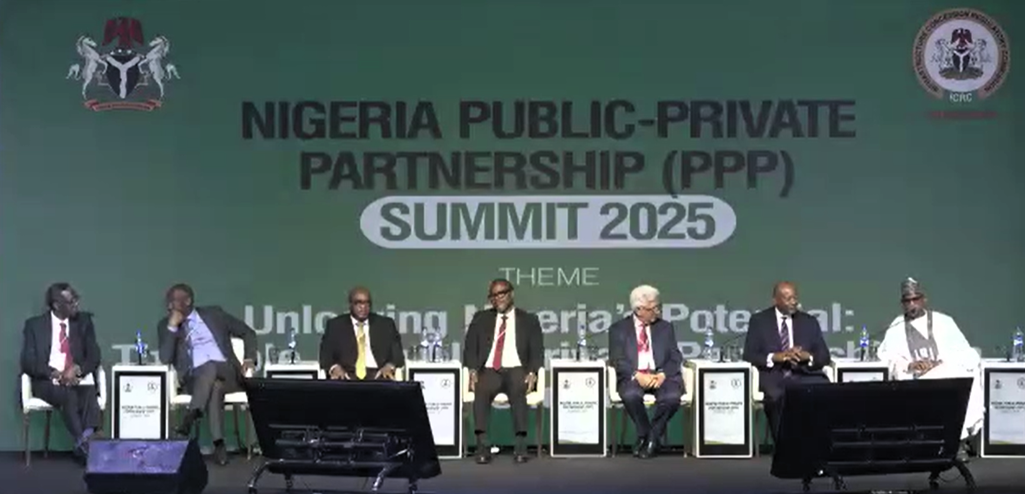
At the recent ICRC PPP Summit 2025 in Abuja, Mr Rowland Ataguba, CEO of Bethlehem Rail, London and member of the Nigerian Railway Corporation (NRC) Unbundling Committee unveiled a radical plan for the Nigerian railways to make it investible for the private sector and bring about its long-term sustainability. He later spoke from the sidelines of the Afreximbank Annual Meetings 2025 in Abuja and in his inimitable manner, he lays bare the rationale behind the recommendations and what they portend. It’s gripping stuff and gives hope that the Nigerian railways will truly be revitalised with such champions driving it. Excerpts:
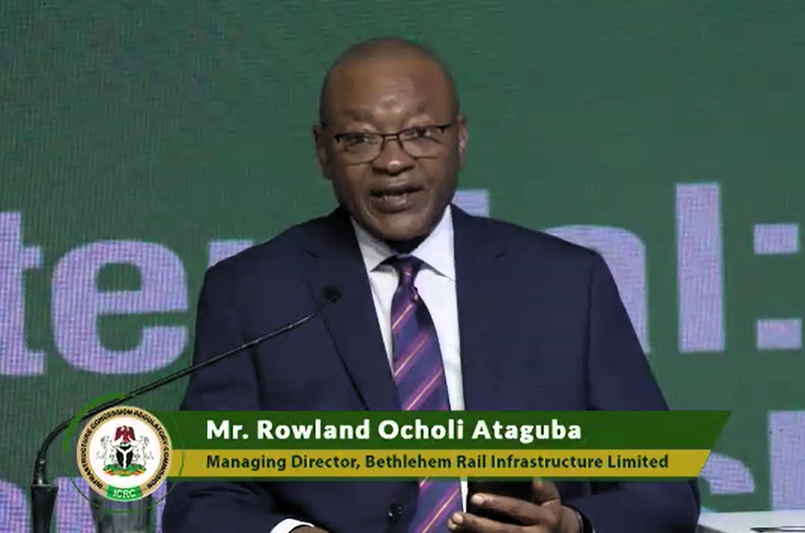
You made an outstanding presentation at the ICRC PPP summit. Tell us what is the state of the railways?
Thank you for your compliments. Our railways remain in the doldrums regardless how much we pretend otherwise with incessant announcements of plans that are not supported by our reality.
Recently the MD of NRC Dr Kayode Opeifa announced plans to extend the railways to connect multiple cities. Surely that must be good.
Yes of course, if it is done and is sustainable. Recall that Rotimi Amaechi as Minister of Transportation made promises about connecting all state capitals and centres of economic activity only to turn around to say that there was no money for the projects after aggregating nearly $25bn in contracts to the Chinese that potentially leave us open to billions of dollars in claims for breach of contract. So, I wouldn’t hold my breath. To be fair to Dr Opeifa, he is new to the industry and has a bit of learning to do. He talked about new light rail in Ogun and Kaduna States, mass transit services on the existing narrow gauge in Niger and Plateau States, and the Red line in Lagos. He was vague about any others though. None of these projects are new by the way and some are already running or have been in the pipeline for some time. The Kaduna and Ogun light rail projects are likely to face funding challenges because being passenger rail, are unlikely to have a sound business case. So, lenders will likely look at the States’ cash flows from other sources such as their FAAC allocations and IGR. Kaduna State may struggle given its debt repayment to revenue ratio. Ogun State while having deeper pockets is developing a deep-sea port at Olokola, a dry port at Papalanto and has built a cargo airport at Iperu. What may however be a better option for it is to connect all 3 facilities by heavy rail that will connect to the national rail line at say Papalanto. A light railway is a social service that is unlikely to be sustainable from rail revenues alone and they may have to look for other creative channels to complement revenues which however leaves them with a challenge of
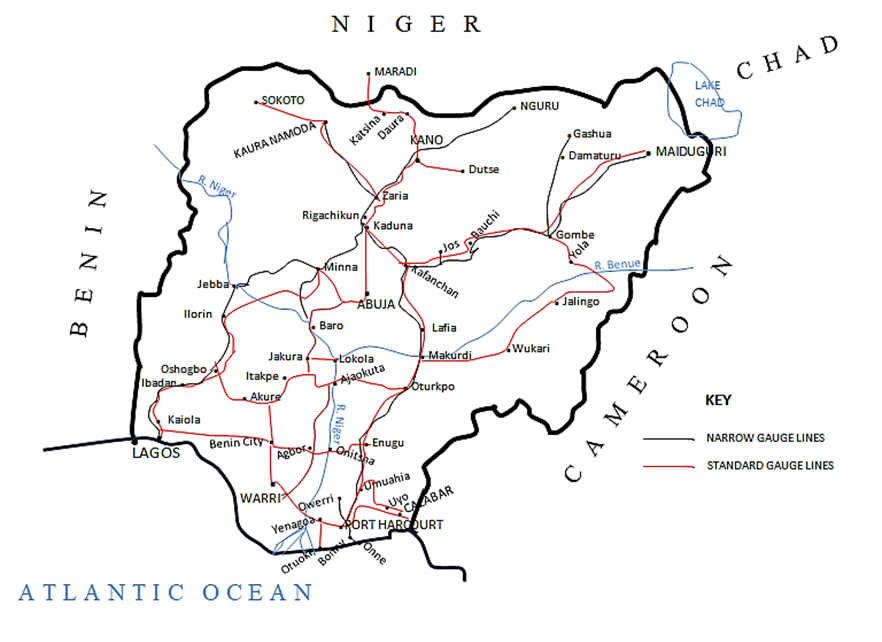
how to move freight from the deep-sea port and airport except by truck and we know the problems it brings. The narrow gauge passenger services for Niger and Plateau states are more of populist exercises just like Jirgin Sambo in Kaduna of yore which is now defunct. They make great optics especially for governors seeking re-election but add no real economic value and are unlikely to be sustainable. Lagos Red line running on the NRC tracks is unlikely to achieve their 500,000 passenger trips per day target which is essentially 250,000 round trips per day, due to line capacity issues. Considering that there are about 1m round trips per day on that corridor, even if it achieves their target, however unlikely, it would not solve the problem of congestion on the corridor though it may alleviate it somewhat. My worry is that there is no word about the outstanding contracts that are not being funded nor about reforms in the NRC. The focus is still on passenger rail and the NRC will continue to struggle because its business strategy remains incoherent. Bottom line is that we cannot keep doing things the same way and expect a better result.
$25bn is a lot of money! That’s about N40 trillion! Pls break it down for us. Which contracts do you refer to?
Coastal railway, Lagos-Calabar, is one and no one seems to know what is happening with it. It’s an $11.2bn contract that was first awarded to CCECC in 2014 for $12bn. It was re-awarded in 2019 for the lower figure but not a shovel has hit the ground in over 10 years; Another outstanding project is Itakpe-Abuja with a spur to Lokoja and a deep sea port at Warri, which was awarded in 2019 for about $3.9bn to CRCC as a PPP in an opaque procurement process. There has been no movement on it in over 5 years; Ibadan-Abuja is another one. A $5.2bn contract first awarded in 2006 to CCECC and re-awarded in 2018, has seen no movement on it either; Fourth is Kaduna-Kano which was first awarded in 2006 and re-awarded for about $1.4bn in 2018 to CCECC. It was funded but the client (read Amaechi) imposed scope changes which has more or less doubled the cost and derailed the programme, the additional funds required to complete being uncertain; Fifth is Port Harcourt – Maiduguri rehabilitation which was awarded in 2021 to CCECC for about $3.2bn. It has not progressed beyond 5% completion after 4 years; There is also Baro-Minna rehabilitation that was awarded to CCECC about 2022 for about N80bn at the time. It too has seen no movement and that price may no longer be tenable given the naira devaluation.
When you say a contract is not being funded, is that not a criminal offence under the Public Procurement Act?Awarding a contract without a clear funding plan is a crime but we breach the law repeatedly in Nigeria without consequence. Who will bell the cat? Are you suggesting that the funds were not assured when the contracts were awarded?Yes, they weren’t. It isn’t like the funds were available and were then misappropriated. Only in the case of Lagos-Kano which was awarded in 2006 for $8.3bn, was there more than enough money to complete it in the contract duration of 4 years but here
we are nearly 20 years on, still grappling with only about 20% completion of the original scope. In the case of the Coastal railway which now appears to have completely disappeared from the budget, the contract signed with the contractor cannot however be wished away. He will expect compensation should we cancel it or a higher price if we now wish to proceed but the funds are just not there yet.
So, what happened in Lagos-Kano standard gauge if it wasn’t about money?…
The $8.3bn Lagos-Kano SGR story is a pitiful one. It is about selfish and overbearing governors who didn’t object when it was contracted in 2006, perhaps out of fear of Obasanjo, and agreed that it be funded from the excess crude account which held over $60bn at the time. As soon as Obasanjo left in 2007 and Yar’Adua came in, they started to sing a different tune and leaned on Yar’Adua to unravel the arrangement. Some of them even claimed that since the railway line didn’t pass through their states they didn’t know why they should fund it as if they were not stakeholders in global Nigerian economy. Unfortunately, Yar’Adua yielded and shared the excess crude account money with the governors and that is how we’ve ended up with an uncompleted and inchoate standard gauge railway nearly 20 years on. Some of the governors bought more executive jets for their use with their share among other apparent frivolities. Considering that the funding requirement of the contract amounted to only 10% of the sums in the excess crude account at the time, I don’t understand why they didn’t just fund the contract and share
the residual which would have been over $50bn. Instead, they shared everything and left us holding a dodo of a contract. Even the FG share was enough to fund the contract but as Yar Adua is not here to explain the reasons for his actions, we must let sleeping dogs lie but Diezani Allison-Madueke who was the Minister of Transport at the time is alive to explain. I must also add that the procurement of that contract by Obasanjo left much to be desired as the only two bidders were sister companies, so heads or tails, they won and I don’t believe we got a fair price.
It is all so untidy and we must clean up our act if we must make progress. We have made these commitments to the Chinese contractors in the expectation of loans from Chinese banks that have not materialised. The clever clogs who drafted or awarded the contracts never thought to caveat the government’s obligation on our ability to secure the loans. Now we’ve got a contractor sitting squat on contracts that are limiting our ability to secure loans elsewhere or without significant cost implications.
It really sounds incredible. What’s the way out?
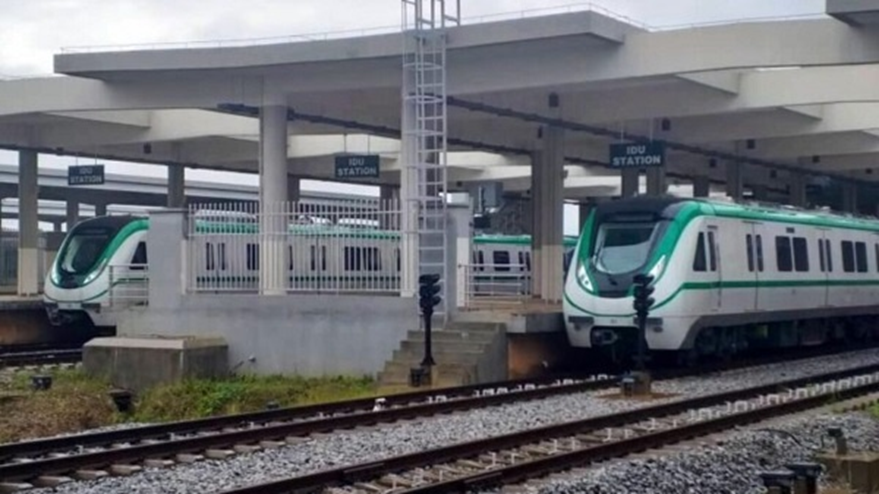
First, we must review our public procurement practices. We need culture change. If we are to make progress. Public officials who compromise and expose us to damages must face sanction as prescribed by law. These include the Ministers who sign the contracts and the civil servants who draft or advise them to sign such illegal contracts. The contractors must also be held complicit and accountable. Until we start doing the right things, we will continue to have these problems. The BPP system had some credibility but all of that appears to have been eroded. In 2011, we reviewed the outstanding infrastructure contracts of the FG for the Goodluck Jonathan government. In 2016, we reviewed railway contracts awarded between 2010 and 2014 for the House of Representatives. The same issues of institutional mediocrity and apparent corruption have continued to dog government’s procurement of contracts and the politicians are not helping with their disposition. Yes, the formal BPP system can be sluggish and even cumbersome but it’s for good reason as public funds must be protected and that is the nature of the beast. While Ministers may be in a hurry to be seen to perform given their relatively short terms in office, nothing can excuse the lapses in the system as currently experienced. How can you explain single sourcing a $12billion contract when it has nothing proprietary? The coastal rail contract was the largest single contract ever awarded by the government at the time. Since then, we have done more of such. Simply put, bad behaviour going unchecked begets more. So, we have also single sourced the coastal highway. The outcome of a discreditable system is failure and abandonment leading to waste and dashed hopes. Look at our growing catalogue of uncompleted or abandoned projects. It is mind boggling. Most of them have problems stemming from their conception and procurement. Most of the borrowings for infrastructure are underpinned by government’s cash flow rather than a sound business case. The appropriations system is also throwing up cause for concern. How can you lump several major contracts together as a line item and put a figure against them without a break down? That is hardly transparent. You’d also find contracts supposedly completed and commissioned many years ago still featuring in this year’s budget. What is Idu-Kaduna railway that was supposedly completed in 2016 still doing in the 2025 budget for instance? It makes you wonder how reflective the budget is of our reality. Meanwhile, the sums voted for the above outstanding railway projects are relatively paltry, which suggests that we still don’t have a clear pathway to funding them. This may mean that we are likely to end up with more abandoned projects.
One of the light hearted moments of your presentation was your protest of what you perceived as the marginalisation of railways in favour of roads. Your passion was evident and compelling.
Make no bones about it. The marginalisation is real and it’s not just a perception. Take a look at the budget and see how much is devoted to roads and how much rail gets.The session was for railways and roads but was dominated by roads. The organisers acknowledged the oversight and it is better left there. One problem that we have is that the champion of our industry ought to be the NRC and the FMT to a lesser extent but it’s as if they are asleep, so we are undermined and underrepresented when it counts. The Minister who should have been on the panel with me was a no show and sent no representative. Roads had a Minister in attendance. Meanwhile, MD of NRC too was a no show though he sent a representative though they weren’t on the panel. So, we may be our own worst enemies it would seem and the apparent enablers of our marginalisation. Railways remain the solution in symbiosis for a sustainable roads system. We ignore this fact at our peril. Anyway, enough said.
Your PPP model appears to dovetail into the unbundling of the NRC that you have been championing. Is that correct? But if the government can secure the loans, why not leave the private sector out, after all the railway can be considered a social infrastructure?
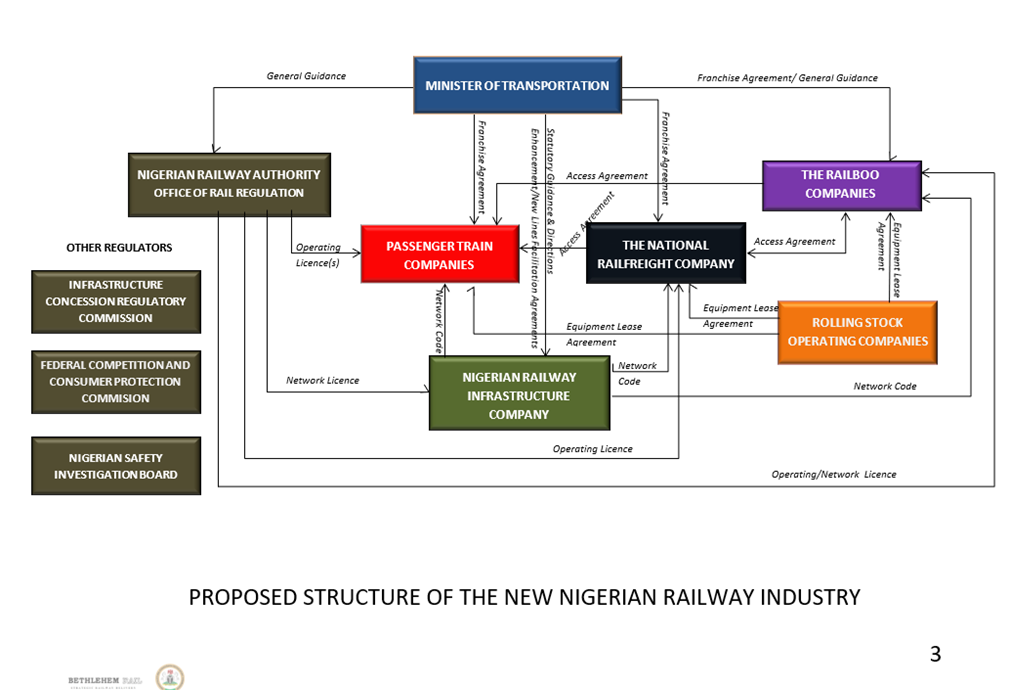
Yes, it does and in order to attract private investment to the railways, we must make the railway investible which can only be done by unbundling the NRC to create the products that can attract private investment.
Your premise is however faulty. First is that the government has not managed to secure the loans to support much of the contracts it has awarded, talk less of all that needs doing. The reality is that there is a role for everyone. We’ve been running the railways as a social service for over 60 years and it’s been a disaster. It’s been bankrupt twice, has served only a handful of our teeming population while solving little if at all, of the logistics problems associated with a country of such size and distances. Furthermore, the government alone cannot fund the railways in the face of other demands in law and order, education, health, defence etc. The railways we need requires about $40bn (N64 trillion) of investment in infrastructure and equipment, much of which can come from the private sector. Imagine the boost to the economy if we put that kind of money to sweat rather than leaving it to sit in short term, low risk instruments. Government’s execution of infrastructure projects has been characterised by inefficiency, waste and apparent corruption and is not recommended. The more appropriate role for government is in regulation and facilitating private investment in creating the enabling environment. Private capital is also more efficient and productive. It is agile and versatile. Besides, private capital brings with it superior management capacities and enterprise instigating innovation and continuous improvement in business performance.
You also talked about culture change as a condition precedent for the envisaged transformation. Can you expand on this?
There are many levels at which we require culture change. First is the government, comprising the executive, legislature and judiciary branches. The executive needs to be more transparent and accountable in conducting its business. The anomalies with contracts I talked about earlier is a microcosm of a general malaise of sloppiness and deficit of integrity in the conduct of government business. The civil servants apparently betray a culture of corruption and shoddiness that has brought the entire service to disrepute and needs to change. Importantly, government must accept that a PPP is a partnership with the private sector and not the master-servant type relationship it has nurtured with its contractors and suppliers. It must also appreciate that it is in competition with other countries and jurisdictions for the investor’s attention and interest. It is the one that needs to fawn over and cajole the investor and not the other way around.
The legislature needs to be seen to be more independent of the executive. We need to see a reduction in the turnover of its membership which is perhaps informed by a culture of patronage. All of which is a comment on the way we play politics in our country. Legislators are changing far too often and need to remain longer in office to build capacity and expertise in particular areas. The members are also in too many committees in my opinion and may not have enough time to review the heaps of reports that they receive. Their committees also need to be better funded so that they can buy in technical expertise to help them in oversight.
The judiciary has a perception problem which only it can resolve. Some judicial decisions have been controversial and raised concerns as to objectivity. The perception of a compromisable judiciary is one reason many investors may prefer to domicile Agreements in foreign jurisdictions. There is also the wider business community who may not be innocent of suborning corruption. From the banks, accountants, lawyers, architects, engineers, surveyors and other professionals, contractors and suppliers, even civil society, police and law enforcement, all are perceived as complicit in the apparently pervasive corruption in the conduct of government business.
The general public may also be shirking its responsibilities, call it the Stockholm syndrome if you like. It is claimed in some quarters that poverty has been so weaponised in the polity that the people are willing to overlook the indiscretions of public officials without caring what harm might ultimately be done to society. It may sound quite bleak but Nigeria will rise and fall not just on the systems we employ but on the consensus of everyone that we want a fairer and more equitable society that is intolerant of deviance from acceptable standards.
So, why separate the rail freight business from the passenger rail service? Surely the profitable freight business can subsidise the passenger service to keep fares affordable.
In theory but not in practice. Cross subsidies are notoriously inefficient and prone to abuse. Aside this, rail freight and passenger rail are very different businesses, they serve different customers, use different types of equipment, require different organisational arrangements etc. We also need to encourage specialisation but principally, we must find a way to keep the railways functional at all times. If all it does is take the strain off the roads, that’s more useful than a dead railway, but we also know how rail boosts the economy when it works well. It’s been operating in fits and starts for the last over 50 years. The rail freight business is the backbone of railway. Its decline on Nigerian railroads is at the heart of the problems of our railways’ lack of a coherent business strategy. Passenger rail is a particularly difficult business to run and will take up all of the attention of a horizontally integrated operator, that is, one offering both freight and passenger services, to the detriment of his viable freight business and thus buttresses the case for separation.
The pareto principle which has been borne out by experience the world over, suggests that such an operator may spend 80% of his time on the business that brings him 20% of revenues and conversely only 20% of his time on that which brings in 80%. This is the sad story of the NRC. What we want is a freight operator that is 100% focussed on a business that brings him 100% of revenues, not one that is distracted. The FOC will have control of the track and grant access to other operators. He will be responsible for maintaining the track and will do so expeditiously because his business demands that he does. The other operators can devote their 100% in making their business work too. This will make the railway sustainable rather than the current situation where the railway suffers such redundancy that is, when it’s not in one crisis or the other. Imagine shutting down the Warri-Itakpe train service for weeks just because of a lack of engines. What we cannot afford is for the railways to pack up as we have had in the past. Whatever happens, we need freight moving efficiently and expanding the economy. Our mineral sector is not thriving as it should largely because of our poor logistics infrastructure.
The British are renationalising their railways. Isn’t that indicative that the model you are advocating has failed in the country we are learning from?
Not at all. It is true that the British gave the world PPP and thanks to Margaret Thatcher of blessed memory. However, what is happening may be called partial renationalisation and I daresay, is not entirely about business performance, but in my opinion may be more about political dogma and the politics of envy. Notwithstanding, we are not going back to the old British Rail model of a single state owned vertically and horizontally integrated operator. We are moving from vertical separation (of the Railtrack and Network Rail, and TOCs and FOCs era) to partial separation with a state-owned GB Rail as a vertically and horizontally integrated operator with other operators especially the freight operators competing for business with it. Some of the busiest routes such as the west coast main line would be open access. Remember also that the rail freight business of British Rail was sold off during the Thatcher privatisation and is not being nationalised though GB Rail will operate freight services in competition with the existing FOCs.
Running a passenger rail business is a tough game and some of the private operators failed which is not uncommon in business life. The covid pandemic was crushing for many passenger transportation businesses as the world locked down. Shareholders of the better run private operators who had taken the risks of investment in the franchises cashed out and the left leaning politicians in the labour movement are claiming that the unions can deliver similar performance if not better, with the benefits accruing to the public purse rather than the pockets of private investors. We’ve heard these sentiments before and many haven’t quite forgotten just how bad British Rail was before privatisation. You must remember also that the British railways was established by the private sector and was nationalised during the emergency of the world war. So, we have a history and culture of government intervention. Hopefully some important lessons have been learned but the jury is out on the William-Shapps plan for GB Rail. Let’s wait and see what happens.
You went to great lengths to explain the different vertical and horizontal structures for railway PPPs and ended up choosing the partially separated network with a vertically integrated freight operator and horizontally separated passenger operators. What does that really mean in lay terms?
As I explained earlier, the freight operator will have control of the track. That’s his vertical integration. Many people confuse ownership of infrastructure with control which don’t necessarily mean the same thing. In this situation, ownership of the track lies with the Infraco which concessions it to the freight operator who will control and maintain it. The passenger operators are vertically separated because they do not control the track and will be granted track access by the freight operator. As they are offering only passenger services, they are also horizontally separated. Likewise, the freight operator is horizontally separated as he is offering only a freight service. The passenger operators may also choose to serve particular discrete markets only, which is also known as horizontal separation. For instance, the Lagos Red
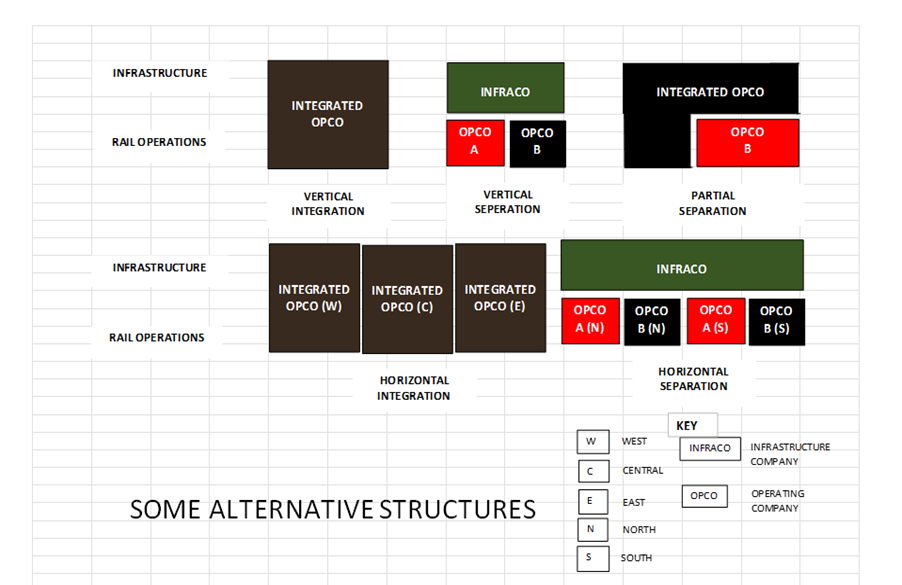
line operator running from Marina to Alagbado could be one such operator. Another passenger operator may run just Lagos-Ibadan trains or Port Harcourt- Kano, while another runs Warri-Kaduna trains and so on. Our rationale must be how to keep the railways alive and useful which is by prioritising rail freight. In the classic case of partial separation, the vertically separated operators compete with the vertically integrated operator but in our case, we have kept it simple by horizontal separation. This creates a very powerful private monopoly in the freight operator and he will need to be robustly regulated so he doesn’t abuse his position.
So, what is wrong to leave the NRC as it is and allow other operators to compete with it on the same track either as vertically separated and/or horizontally separated operators? That would still be partial separation? Alternatively, can’t the NRC be reformed to transform it into the dynamic powerhouse that you seek just like JAMB has been transformed from a python swallowing money to a resourceful and productive agency? The railways in India are run efficiently by the public sector and is even profitable.
Everything please! The big elephant in the room is NRC’s track record and culture. We’ve had over 60 years of consistently poor performance and a leopard cannot change its spots. We’ve seen first-hand how unwelcoming they have been to private investors seeking railway concessions. No serious investor wants to invest in the railways as it is because the risk multiplies exponentially. Nonetheless, NRC cannot be regulator and operator as it does now, so you will still have to unbundle regulation out as a minimum. The priority is about efficiency in railway operations and we are talking about bringing $40bn to the railway which would not otherwise come and which the government cannot provide. Regardless of all the big announcements, only about $5bn of capex has gone to the railways in the last
20 years to build infrastructure and buy equipment that have in any case performed sub optimally. The NRC as currently constituted is the greatest disincentive to private investment in our railways which is why we must unbundle it. It even currently does not have a governing board and has gone for protracted periods without one with all the implications for corporate governance. Even when appointed, the board members are usually political patrons with little understanding of the railway environment. It’s a no brainer and we’ve gone past that point of a complacent public corporation haemorrhaging public money and doling out pitiful excuses. As much as we complain about our power situation, no one will suggest that we went back to how things were before PHCN unbundling. What we must do is learn lessons and build on what we have.
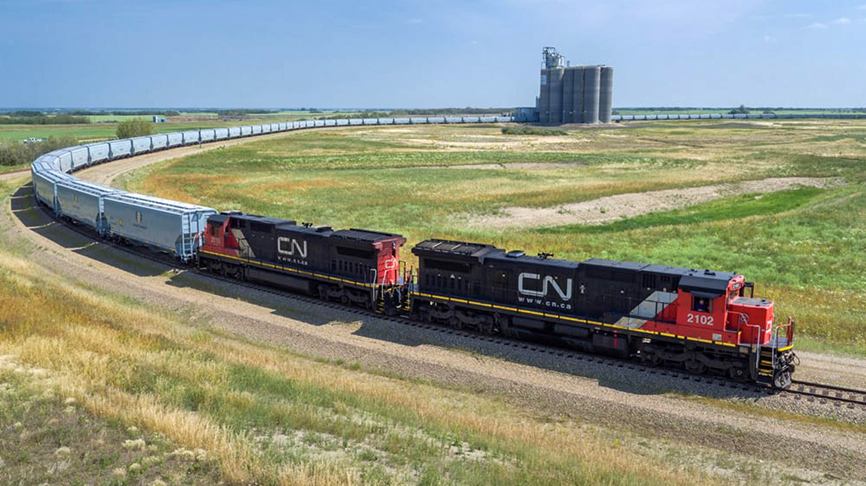
Now, reform in our context probably needs better clarity. In a way, we are reforming the NRC by restructuring the environment and must keep our eye on the ball. We are seeking radical changes that would provide the incentives for the private sector to come in. The NRC’s competitive environment differentiates it from a JAMB which is at best competing with its self and its history. The competition in transportation is cut throat and NRC has lost out big time! To turn this around, we must be bold and take drastic measures. India is a mature democracy with efficient public institutions. Our challenges are different from theirs. We’ve been trying to reform the NRC for over 20 years but it is resistant to change. It’s the nature of the beast. Recall that as far back as 2008, the Director General of the Bureau of Public Enterprises (BPE) Irene Chigbue, had declared that the “railways under public ownership and management in Nigeria has not proved to be viable in the last 30 years”. Nearly 20 years on, not much has changed other than that more tax payer dollars have been ploughed into the bottomless pit. So, we are talking of 50 years of haemorrhaging public money which is just not sustainable. The Japanese railways are run by private operators even owning their right of way. The Canadian railways are owned and run by private corporations such as Canadian National (CN) and Canadian Pacific (CP) which are freight operators with the federal government participating in Via Rail and municipals participating in smaller railways for passengers such as GO Transit. Same thing in the USA with the biggest railroads being
owned by private corporations such as BNSF, Union Pacific, CSX and Norfolk Southern whom are freight operators. Government participation is in AMTRAK the passenger rail business with states and municipals operating intercity and urban transit systems. Bill Gates owns a large chunk of CN while Warren Buffett is a major shareholder in BNSF. Australia has a government owned system with regional governments owning and operating railways within their territories. Miners build their railways from their mine sites that connect with the public railroads to ports. Hong Kong has a state-owned system MTR which runs their trains and is so successful that it also runs trains in other countries. There are other configurations in Mexico, Argentina, Holland, Sweden and Germany which depend on the market demand for passenger or freight rail and government policy. The point is, there is no one size fits all and other exigencies play a decisive role in determining what model to employ. In Africa, we are generally moving from the state owned vertically and horizontally integrated monopoly operator to partial separation though the best advertisement for the vertically integrated model has been Bollore’s African Logistics Group which ran Sitarail in Cote d’Ivoire, Camrail in Cameroon and Benirail in Benin Republic. Its recent sale to MSC for $6.2bn is perhaps indicative of what value can be unlocked via railway PPPs. Bottom line is that we must design what works for our unique environment and learn lessons from across the world.

You have proposed the creation of ROSCOs to lease equipment to the operators to as you say, lower the barriers to entry. What does that mean and can’t an operator choose to bring in rolling stock from other manufacturers ?
The ROSCOs is one of the innovations of the British PPP which worked extremely well. We are borrowing a leaf from them and recommending 2 ROSCOs (otherwise, Rolling stock operating companies) only so we do not have a proliferation of engines as our country can easily become a dumping ground for foreign junk. We’ve proposed Wabtec and CRRC whom are some of the world’s largest producers of rolling stock. They will be encouraged to establish assembly plants in Nigeria and will do so because of what the size of our market portends. One of the major investment an operator will require is in equipment. Leasing is more efficient and could limit the operator’s exposure by up to $1bn. So, it is unlikely to make business sense to own when a lease option is available. However, for argument’s sake. If say Siemens or Alstom was the operator or a part of a consortium, and wanted to use their own products. It would be unfair to say that they can’t however unlikely.
Is the Infraco you propose financially viable and why can’t it be an operator too?
The revenues from concession fees alone are unlikely to cover the Infraco’s operating costs and it will require heavy capitalisation for track renewals and expansion. So, this is where the MTR rail + property model comes to the rescue. There are many opportunities in asset management that it can leverage to give it a decent return. Bottom line is that these investments are for those who know what they are doing and are well resourced. The takeaways from the unbundling of PHCN is to say never again must we let public assets fall into the hands of political patrons or their cronies with little or no capacity. Such would have only one possible outcome. Failure.
The Infraco needs to specialise and it would have its hands full with its portfolio of assets. We need focus, not a jack of all trades that masters none. Railway operations is a huge area and it is better the Infraco sticks to the knitting of asset management.
Shouldn’t there be more than one Infraco and don’t you see the danger of fragmentation as a challenge to cohesion? Railways are unique in their requirement for close integration of the various components to provide a complete service.
I couldn’t agree more and it’s a delicate balance that we must achieve. Too much integration leads to unwieldy and top heavy structures, and you must give entrepreneurs room to sweat assets for optimal returns. Too much separation creates strategic incoherence and undermines business performance. This is the main complaint of the British Rail privatisation.
So, States will have their own Infracos who could be vertically and/or horizontally integrated operators. Same for miners and manufacturers, that is, the Rail BOOs. The Infraco in the presentation which we have christened as the Nigerian Railway Infrastructure Company is the asset management successor of the NRC.
You described the Regulator as the fulcrum of the new railway environment. Is it not contradictory for you in placing so much reliance on a government agency after expressing such reservations? Also, what about the Minister and railway governance?
The Minister represents the FG’s interest which is the public interest. He is perhaps the most important figure in the mix though his role changes from its current arrangements where the NRC Board is accountable to him. He is responsible for railway policy and provides statutory guidance to the stakeholders. He (or MOFI) will hold the FG’s stakes in the successor companies which would have their individual boards. These would be private companies and subject to CAMA perhaps except the regulator. The Minister may award the concessions to the various operators on the recommendation of the Infraco as this comes with the imprimatur of the President giving comfort to investors and the sub nationals.
Now, the FG has some natural strengths. One of which is in regulation though we are not proposing that it be excluded completely from the other successors. The government equity in the Opco and Infraco is however capped at a maximum of 49%, so that the private core investor would have the controlling stake. Now, the independent regulator is a recent phenomenon, and is defined as, ”a body with its own powers and responsibilities given under public law, which is organizationally separated from ministries and is neither directly elected nor managed by elected officials.” The NCC and NERC are modelled on this premise and have worked relatively well so far. We have christened ours as the Nigerian Railway Authority and can examine the regulator’s independence from two standpoints. First is its relationship with government and in particular, with the elected officials of government on the one hand, and its relationship with the other stakeholders in the industry it is responsible for regulating on the other. The idea of regulators being independent of those it regulates, and not succumbing to “regulatory capture”, has always been understood in regulatory economics. It is the idea of regulators being independent of government that is a more recent phenomenon which goes without saying that the regulator’s actions must be appropriate to the scale of the problem it seeks to address. It should be accountable to the public and stakeholders in the industry concerned as well as the government. The reasoning behind its decisions must always be clear and public, and they should be targeted to meet a desirable outcome.
For the regulator to be truly independent, it should not ordinarily be possible to appoint or dismiss it until the end of its tenure unless there are glaring cases of misconduct and the process of termination must be subject to legislative oversight. Furthermore, while the regulator may receive guidance, it may not be directed by the Minister. The statutory public interest duties must be set out clearly in legislation and it should be accountable not just to the Minister but also to the legislature and interest groups with a duty to explain decisions clearly and transparently, and finally, the decisions of the regulator must be final and may not be overturned by the Minister. The railway regulator’s powers must be wide ranging and include, to consider complaints about possible infringements, impose interim measures to prevent serious and irreparable damage, carry out investigations on its own initiative and/or arising from complaints, impose financial penalties within limits prescribed by legislation, issue and enforce directions to end infringements, accept binding commitments in lieu of decisions, publish guidance and refer cases to the FCCPC. It must have the power to demand production of documents and information and to search premises.
So, you unbundle the NRC into a regulator, Infraco and Opco. What happens to the non-core assets and how receptive has the government been to these proposals and what are the next steps?
The residual non-core assets comprising of factories, foundries, printing presses, caterers, surplus property etc will be corporatised and privatised to support the railway. Some of the property holdings will be retained and vested in the Infraco for the future expansion of the railway and the development of high yielding assets in city centre developments such as hotels, shopping malls, office and residential developments.
These proposals are essentially the outcomes of our deliberations in the NRC Unbundling Committee which is domiciled in the Federal Ministry of Transportation. The Nigerian Railway Corporation, Federal Ministry of Transportation, National Assembly and the private sector are represented in the committee. There is a bill in the National Assembly for the repeal and re-enactment of the NRC Act which reflect these proposals sponsored by Hon. Blessing Onu. Once the bill is passed and assented, we must then diligently implement the changes. There may be a period of disequilibrium initially before the industry settles into the new structures. One challenge that rail restructuring faces and we have been battling it over the past 20 years is the powerful vested interests that do not want a resurgent railway sector because they perceive that it would threaten their interest but this is ignorance and myopia at work. A thriving railway sector will compete and complement the roads especially for distances over 600km transferring significant volumes of freight from roads to rail . This will improve safety on the roads, reduce maintenance costs, lower greenhouse gas emissions, reduce road congestion and improve productivity.
Restructuring the railways will however not be a walk in the park as its challenges will not suddenly disappear. The other vested interests that have held it back have also not relented, and we must continue to educate and challenge them. The unions must understand that their membership will grow as a result of unbundling, not contract. The workers in the restructured railway industry will come from the existing NRC work force and more hands will be needed.
Restructuring will enable risk to be shared and borne by those best placed to manage them. It will play to the government strengths and provide a pathway for the private sector to invest in rail and encourage specialisation, but most importantly, we will have a sustainable railway.
The restructured railway environment is revolutionary for the Nigerian economy no doubt. It will reduce the burden on the FG and free funds for other public goods. It will help introduce policies and regulations that promote the use of rail and will help strengthen the capacity for local sourcing of maintenance and construction materials, and the development of the national capacity in rail technology especially in the design and specification of standards for the local production of railway components.
You also talked about your forthcoming book?
I am a contributor and not the sole author. It is known as “Thoughts on Land Transport Development in Nigeria” and is published by the Nigerian Institute of Transport Technology (NITT). It is edited by Prof. Joshua Odeleye and Prof. Bayero Farah who is DG of NITT. It is a collection of essays by experts covering road, rail, urban transport, and transport technology and innovations. My contribution is an essay “Nigeria: Railway PPP Options and some lessons” which is a revised excerpt from my yet to be
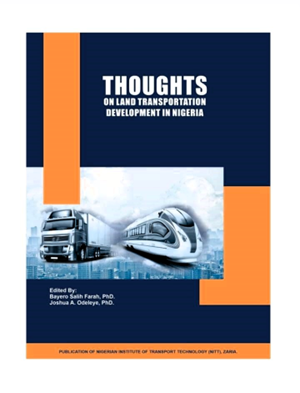
published book, “Modelling the Nigerian Railways” which was serialised and published by my brother and friend, the late Sam Nda Isaiah in his then fledgling Leadership newspaper. It is an essay that draws on the experiences of railway concessions in Africa in particular, and across the world at large.
Finally, when can we expect to see the restructured railway and receive the benefits you talked about so eloquently?
A lot of this is in the hands of government. The NRC can be unbundled over say 2-3 years but the benefits will take some time to filter through though there are some low hanging fruits that would be immediately available to pluck. As Chairman Mao famously said, “a journey of a thousand miles begins with the first step”. We have taken those first steps and must keep hope alive. What I can promise is that we will not relent with the advocacy and the demand that we make hay while the sun shines.